
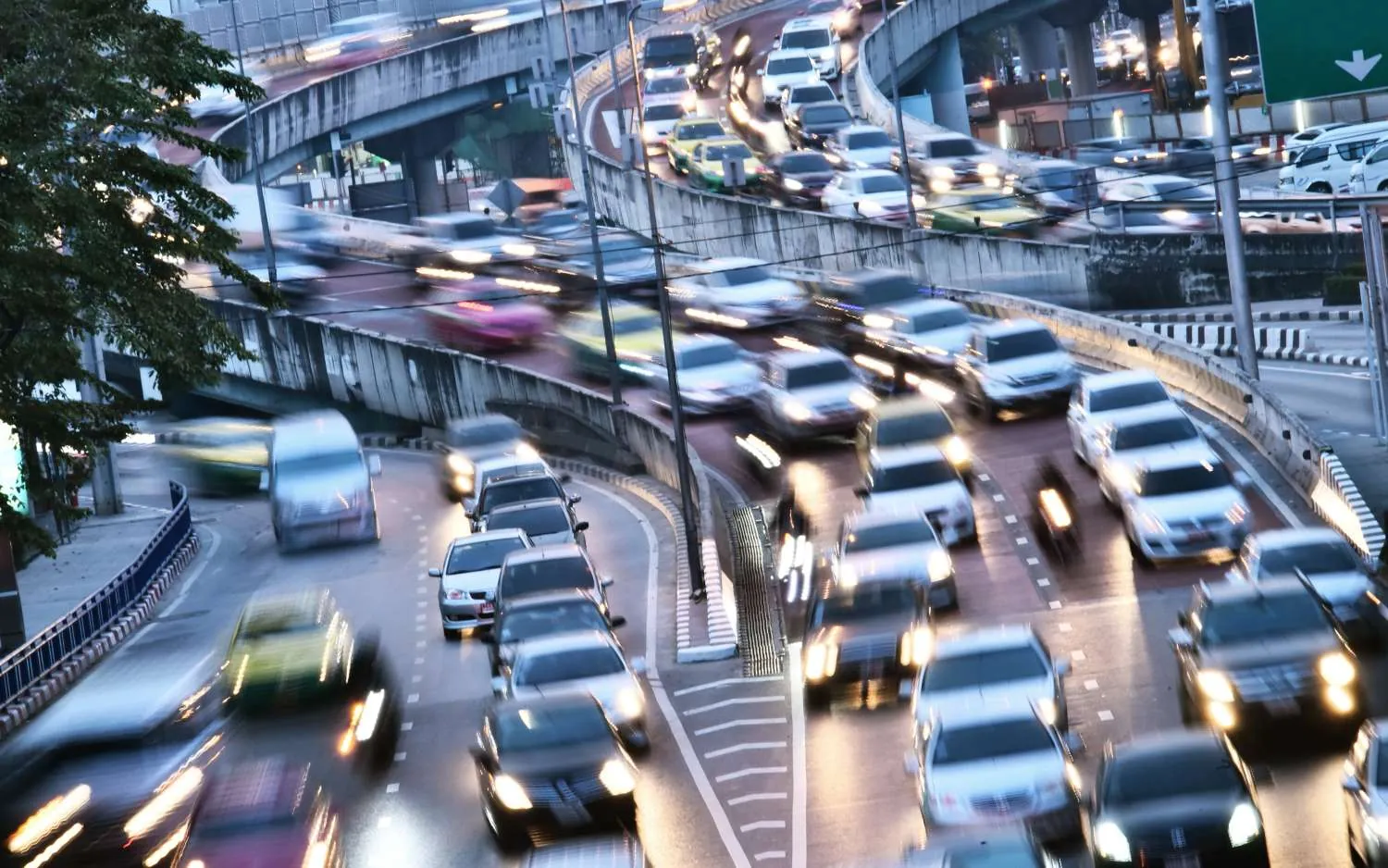
Instead of standing in traffic every morning: For commuters, a serviced apartment at the workplace can be the better solution.
Traveling or staying
Traveling in Germany
Day by day, week by week, year by year
For many employees in Germany, commuting to work every day is as much a part of everyday life as eating, drinking, and sleeping. According to the Pendleratlas 2021 (Federal Statistical Office), this is the case for 40 percent of all employees and self-employed individuals. The distances vary greatly: the majority travels between ten and 25 kilometers to work. Five percent commute more than 50 kilometers and over 60 minutes per trip. And there are extreme cases: people who travel 200 kilometers in the car in the morning and evening. Every day or several times a week. It’s funny for the few.
Even though commuting is part of the routine, few can switch off behind the wheel: listening to music, sorting thoughts, preparing an appointment, or going over the next workday in their mind. For many, getting up in the middle of the night, the traffic jam, and the morning rush of traffic outside the commuter metropolises of Munich, Frankfurt, Hamburg, and Berlin are a nuisance. Many affected people do not even consciously perceive the psychological and physical burden over a long period of time, according to a study by the Techniker Krankenkasse.

Car or train: it doesn't matter
Stress on the track, no matter what
For health reasons, it doesn’t matter whether you commute to work by car, train or public transport. Even among rail commuters, few rave about the daily chat with fellow commuters on the train. Rather, they are annoyed by strikes or disruptions that artificially prolong the workday.
For routes that exceed a driving distance, the car remains the most important means of transport for commuters. On average, trips by public transport take more than twice as long as trips by car. Especially when people move from so-called commuter cities with poor connections to commuter cities with a high density of workers. Translated from bureaucratic German, this means from rural regions with smaller labor markets to cities with high density of workers.
Despite working from home, time spent at home is growing
Remote isn't available everywhere
In the past pandemic years, much work time has shifted to working from home. However, not everyone can work remotely: Many companies still require manpower and expertise on-site, even for digitalized processes. A move to the workplace is still unlikely in most cases. Family and social ties are tied to the place of residence, and rents in the coveted commuter cities are many times higher than in rural regions.
Serviced apartment as a solution
A home at the workplace
In recent years, the commuter metropolises have focused on this target group. There are around 45,000 serviced apartments in Germany. They offer professionals with extended stays at a temporary workplace and commuters the comfort of a second home.
This segment is growing strongly. In the past, more or less pleasant hotel rooms were booked for this purpose, from Monday to Friday, week after week or for a few months. Today, for many employers, accommodating their employees for long stays is part of the corporate culture. The ipartment apartments are fully equipped design apartments, even in the smallest category XS. Instead of a bed, bathroom and desk like in a hotel, all living areas are designed with thought for comfort: cooking, working, sleeping, relaxing.
Traffic jams or the end of the workday. Commuting or arriving home.
You decide. always with <3
Living in the city with design instead of commuter stress
More time for you
This way, commuters and temporary workers can also have a beautiful and comfortable home at their workplace in just a few square meters. The time that would otherwise be wasted belongs to you: for sports, leisure, or simply to relax.
What commuting does to your health
A topic that also concerns employers
This trend should also benefit employers. Studies show that the absence rates due to mental illness among commuters are more than ten percent higher than among workers commuting short distances. The Techniker Krankenkasse cites national and international studies that show that commuting can lead to exhaustion depression and ultimately burnout. A major problem: Many affected individuals underestimate the strain until it is too late. Preventive examinations often fall by the wayside during the tight work schedule and are not conducted during regular office hours.
Living at a distance: good for the relationship
A little distance does good
Of course, it’s not easy living in a foreign city during the week, especially when family or small children are hundreds of kilometers away and the weekend is tight to get everything done. But the distance also has its good points: Nothing keeps a love fresh like a little distance.
Your apartment at the workplace
From one night or for several months